SHARING
Within the framework of adaptation and hyperlocal urbanism, sharing is one of the three prerequisites for achieving a social order where residents are motivated to participate in social life, production, and management of localized sustenance systems. The other two are enjoyment and giving.
It is said that you can easily unfriend a friend on social media, but you cannot un-neighbor a neighbor. How do we move away from seeing our neighbors as annoying or as competition for the sunny spot in the park, and instead see them as valuable assets who help and support many aspects of our daily lives and add to social resilience?
Sharing of space, goods, and responsibilities is an important first step.
One familiar social organization model, cohousing, offers important lessons. Cohousing depends on sharing. The initial residents, usually invited and assembled by the cohousing organizer or developer before construction, decide what to share.
Guestrooms are a common shared amenity in many cohousing complexes. Instead of each unit having extra bedrooms for guests, the cohousing community builds a few guestrooms within the community house to share. Woodworking shops, art studios, common kitchens for large gatherings, landscaping tools, and storage sheds are among other popular shared amenities in cohousing projects.
What these have in common is that they are attainable if shared, but too expensive if owned individually by each household. Shared amenities also save space and reduce consumption. Sometimes these amenities are even rented to the larger community outside the cohousing community.
Sharing becomes a more important enabler as we focus on the diversification of small-scale production. The more diverse the production, the stronger the local economy. This is similar to the way permaculture involves a diverse set of productive activities that support each other.
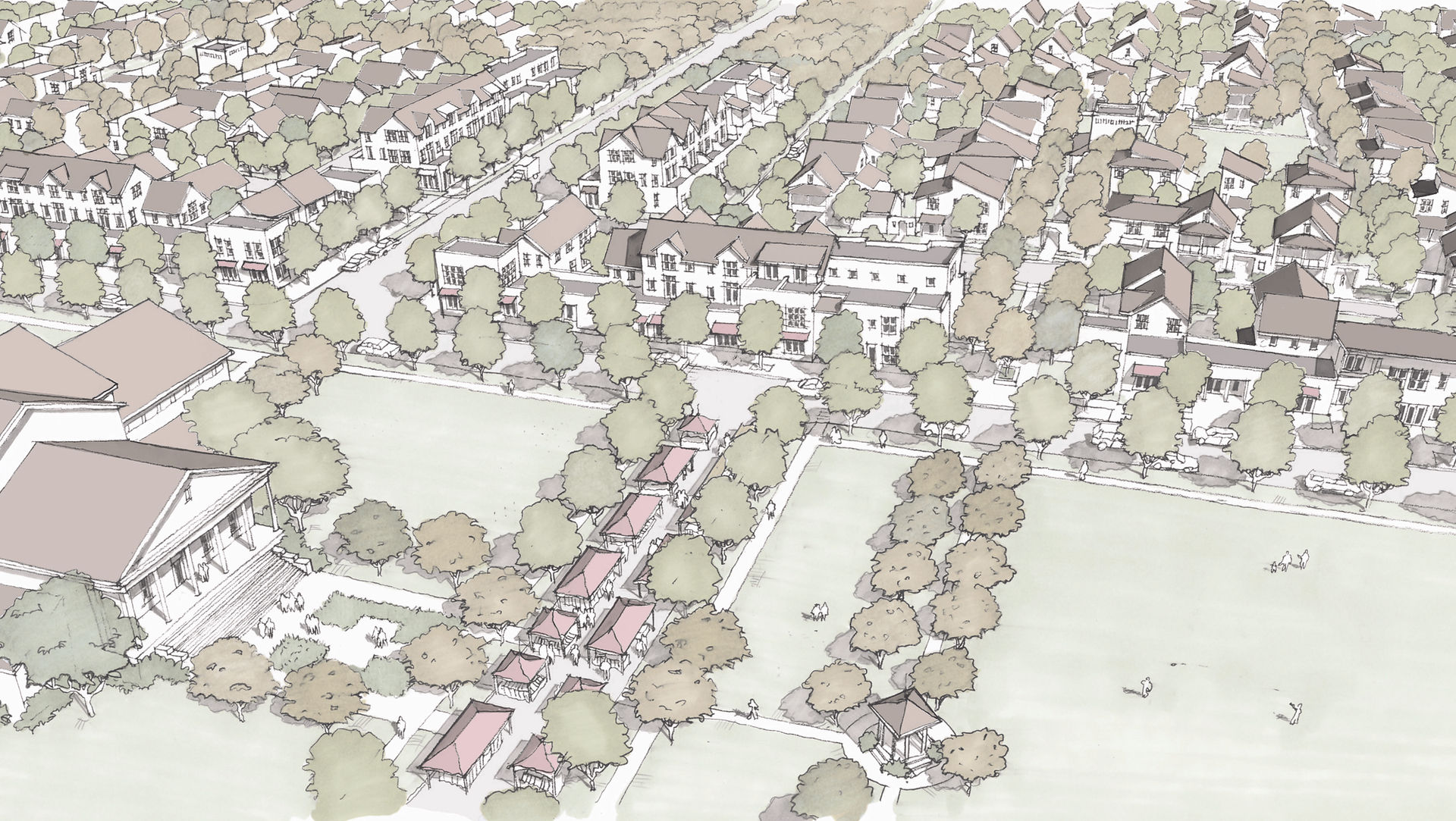
Within the framework of hyperlocal urbanism, a household would have difficulty producing much diversity even if it were a full-time food producer; the compound scale offers a few more opportunities. At the block scale we can start talking about shared amenities such as fruit drying facilities, storages with coolers, composting facilities, and small gardening machinery.
In terms of production, sharing increases diversity via networking and organizing among neighbors. One neighbor brings milk from her goats, another brings eggs from his chickens, and before long there is enough diversity on the table, even at block scale, for a third neighbor to start a modest bakery with only a few supplies needed from outside.
The possibilities grow significantly as we move to the walking shed scale. However, all this sharing and organizing can happen only if neighbors have the desire and time to share.
Back